30.12.2025.
NBS results in 2025
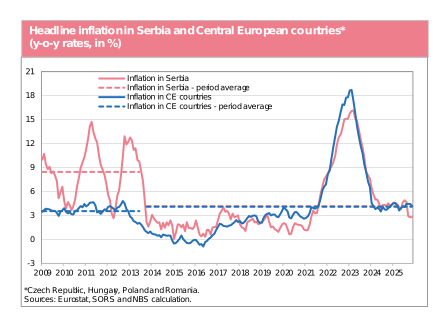
- Inflation is within the NBS target band (3±1.5%), where it will stay over the medium term according to our projections.
- For over ten years inflation in Serbia has been comparable with inflation in regional peers pursuing the same monetary policy regime.
- The financial sector also expects inflation to stay within the target band, as reflected in the fact that this sector’s short- and medium-term expectations remained anchored in 2025 as well.
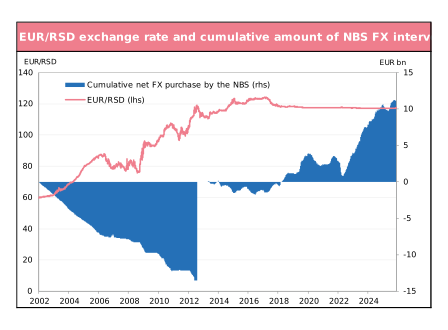
- In 2025, we maintained the relative stability of the dinar exchange rate against the euro.
- The dinar/euro exchange rate is almost unchanged (only 0.3% change), despite substantial challenges.
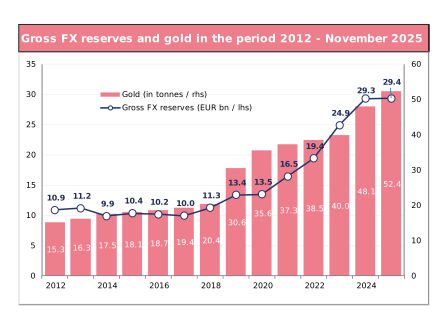
- Gross FX reserves measured EUR 29.4 bn at end-November 2025.
- We continued to increase our gold holdings in FX reserves in 2025 – by a total of around 4.3 tonnes, to a record-high level of 52.4 tonnes at end-November 2025.
- With the global gold price going up, the value of gold reserves climbed to a new high of EUR 6.1 bn, or 20.8% of FX reserves at end-November 2025.
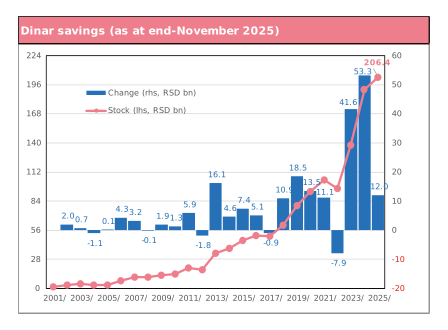
- Dinar savings continued to expand in 2025 – by RSD 15.2 bn (8%), to over RSD 206 bn at end-November 2025.
- The acceptance of Discover cards in the DinaCard acceptance network was enabled in 2025. The acceptance network of UnionPay cards issued abroad in the DinaCard acceptance network expanded further. The number of points of sale where it is possible for DinaCard users to withdraw cash – the “Get dinars” service – increased considerably in 2025.
- We maintained our credit rating with all three rating agencies, including the investment-grade rating awarded to Serbia by Standard & Poor’s in 2024. Such result was underpinned by high FX reserves, responsible monetary policy conduct and a stable and resilient financial sector.
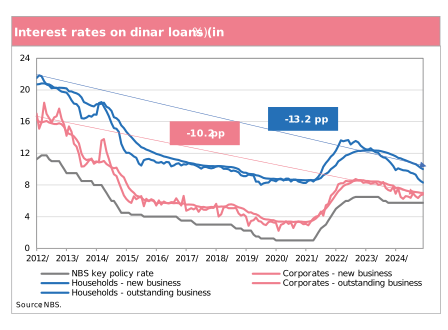
- Relative to June 2024 when we embarked on monetary policy easing, interest rates on dinar household loans decreased by further 3.4 pp to 8.3% in November 2025, while interest rates on dinar corporate loans dipped by 1.3 pp to 6.8% in the same period.
- As a result of the application of the new Law on the Protection of Financial Service Consumers:
- nominal interest rates on credit card debt of natural persons declined from 21.5% at end-2024 to 14.5% in November this year;
- nominal interest rates on current account overdrafts of natural persons decreased from 27.8% at end-2024 to 17.1% in November this year;
- interest rates on housing loans were capped at 5% in 2025, but they moved even below this level (4.4% in November).
- Banks also offered dinar cash and consumer loans to employed persons and pensioners with regular monthly income of up to RSD 100,000, as well as housing loans on more favourable terms, in line with the supervisory expectations of the NBS.
- Since September 2025, banks approved around 180,000 cash and consumer loans, loans for refinancing these loans, and housing loans on more favourable terms, in the total amount of around RSD 143 bn.
- In order to protect citizens’ interests and prevent psychological pressures on the FX market, we also adopted a temporary measure abolishing the fee charged by exchange offices when buying euros from or selling them to citizens. We also took measures to ensure that the channels for supplying authorised dealers with foreign cash are functioning smoothly, even in the conditions of heightened demand. Joint action by the regulator and market participants helped soothe the situation and preserve exchange market equilibrium.
- Banks are required to apply all reasonable forbearance measures to facilitate loan repayment by a consumer if, during the contractual relationship, circumstances that place the consumer in serious financial hardship, or other significant circumstances beyond the consumer’s control, arise.
- Among other things, in 2025 the IMF Executive Board noted: “Serbia’s prudent macroeconomic policies, supported by strong cooperation with the IMF, yielded impressive results. A high level of FX reserves, substantial government deposits, as well as a resilient and well capitalised banking sector are an important support in addressing current challenges. Fiscal discipline is being strictly maintained and monetary policy remains cautious, preserving the credibility of economic policies. The continuation of cautious monetary policy and a resilient financial sector will remain an important anchor in a period of heightened uncertainty”.
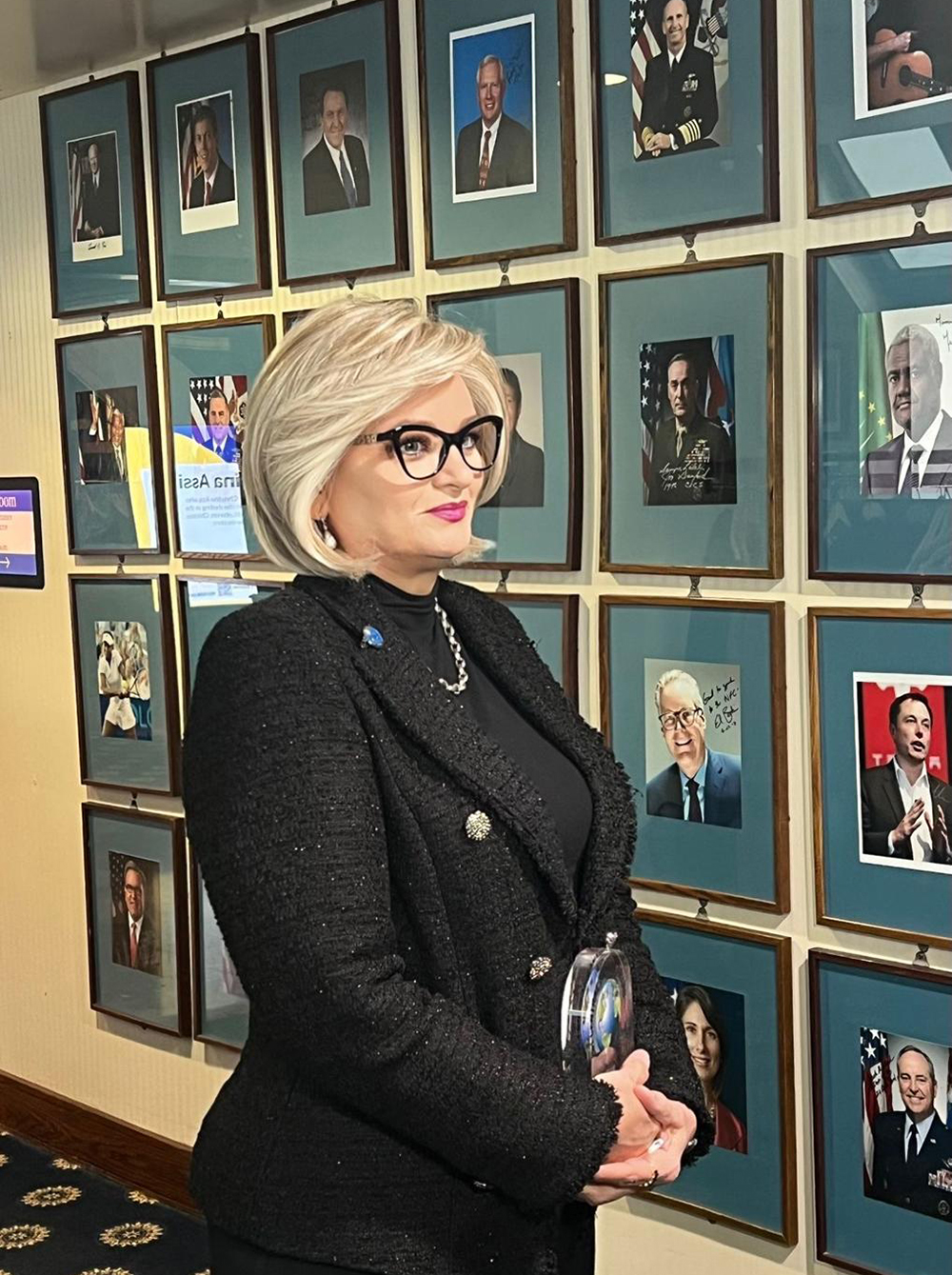
- In October, at a ceremony in Washington, NBS Governor Jorgovanka Tabaković was presented with grade “A-” by the Global Finance magazine, earned in its “Central Banker Report Cards 2025”. In late August, the Global Finance magazine published the names of central bank governors who earned the highest grades, “A+”, “A” or “A-” (in alphabetical order). Grades are based on an “A+” to “F” scale for success in areas such as inflation control, economic growth goals, currency stability, interest rate management and political independence. (“A” represents an excellent performance, down through “F” for outright failure.)
“All the results achieved in coordination with other economic policy makers in our country in the extremely challenging year of 2025 represent a confirmation of sound macroeconomic policies. Among the key factors underpinning Serbia’s favourable credit rating in 2025, the rating agencies highlighted high FX reserves, preserved relative stability of the dinar exchange rate against the euro, responsible pursuit of monetary policy and a stable and resilient financial sector. The NBS, the IMF, rating agencies and other important stakeholders in the international economic system expect inflation to continue moving within the target band (3±1.5%) over the medium term as well, pointing to continued conduct of responsible policies, while the reserves we have built remain a guarantee of stability in the coming period as well“, Governor Jorgovanka Tabaković concluded.
Inflation within the NBS target band
- For over ten years inflation in Serbia has been comparable with inflation in regional peers pursuing the same monetary policy regime.
- Inflation retreated within the NBS target band (3±1.5%), where it will stay over the medium term according to our projections.
- In September 2025, y-o-y inflation slowed sharply to below target midpoint of 3%. This was supported by the application of the Decree on Special Conditions for Trade in Certain Goods, which capped wholesale and retail margins, as well as by the slowing of core inflation, which is under the strongest impact of monetary policy measures, to around 4% y-o-y.
Anchored inflation expectations
- Medium- and short-term inflation expectations of the financial sector remained anchored within the NBS target band in 2025 as well.
- Anchored inflation expectations testify to market agents’ confidence in monetary policy measures and the credibility of the NBS.
We maintained the relative stability of the dinar exchange rate against the euro
- We maintained the relative stability of the dinar/euro exchange rate in 2025 as well (only 0.3% change), despite the challenges we faced early and, especially, late in the year.
- The NBS remained firmly committed to maintaining the relative stability of the exchange rate, both by buying foreign exchange in the middle of the year when supply-side pressures prevailed, and by mostly selling foreign exchange early and late in the year when demand-side factors were dominant.
- Through its FX market interventions, the NBS bought EUR 145 mn net this year (as at November), in order to maintain relative stability of the dinar exchange rate against the euro.
- The NBS responded without delay to robust unjustified pressures on the FX market in place since end-November, triggered by psychological factors. It intervened by selling foreign exchange and took activities to ensure smooth functioning of the channel for supplying foreign cash to the market and other measures in order to protect citizens’ interests and financial stability of the Republic of Serbia.
We maintained a high level and adequate composition of FX reserves
- Gross FX reserves measured EUR 29.4 bn, according to the latest available data from end-November.
- We continued to increase our gold holdings within FX reserves in 2025 – by 4.3 tonnes at end-November, buying gold produced at home.
- A higher quantity, together with the rise in global gold prices, boosted the value of gold reserves to EUR 6.1 bn, or around 20.8% of total FX reserves at end-November 2025.
Preserved credit rating with all three credit rating agencies
- Despite heightened uncertainty in the international and domestic environment, the country’s credit rating was preserved at unchanged levels with all three rating agencies in 2025, including the investment grade rating that was awarded to Serbia by Standard & Poor’s in 2024.
- Among the key factors contributing to the favourable credit ratings that are quoted by the agencies are high FX reserves, the maintained relative stability of the dinar exchange rate against the euro, the responsible conduct of monetary policy and a stable and resilient financial sector.
A continued rise of dinar savings
- In 2025, the dinar savings went further up by RSD 15.2 bn (8%), reaching over RSD 206 bn at end-November 2025, indicating preserved confidence in the dinar and the banking system.
Even more favourable financing conditions continued to support higher sources of financing of consumption and investments
- Past monetary policy easing by the NBS, together with an additional set of prudential measures of support to citizens in 2025, brought about a further decline in interest rates in the dinar credit market.
- Relative to June last year, when we embarked on monetary policy easing, the interest rates on dinar household loans edged down by 3.4 pp to 8.3% in November, while the interest rates on dinar corporate loans dropped by 1.3 pp to 6.8% in the same period.
- The ensured more favourable financing conditions positively affected credit growth (14.0% y-o-y in November 2025), whereby the support to more ample sources of financing consumption and investment was continued through this channel as well.
- The support to disposable household income was ensured also through permanent regulation of the level of maximum nominal interest rates and effective interest rates through the new Law on the Protection of Financial Service Consumers. In this way, interest rates depend on market conditions, but the Law prevents lending at unjustifiably high interest rates and strong rate hikes triggered by external shocks. As a result of the application of this Law.
- nominal interest rates on natural persons’ credit card debt were reduced from 21.5% at end-2024 to 14.5% in November this year;
- nominal interest rates on natural persons’ current account overdrafts were brought down from 27.8% at end-2024 to 17.1% in November this year;
- interest rates on housing loans were capped at 5% in 2025, while moving also below that level (4.4% in November).
The IMF in 2025 – prudent macroeconomic policies in Serbia delivered impressive result
- In December 2024, the IMF approved to Serbia for the third time a non-financing advisory Policy Coordination Instrument intended for countries running sound economic policies.
- Both reviews of the implementation of the economic programme under this instrument in 2025 were successfully carried out.
- After the first review of the economic programme implementation, the IMF’s Executive Board, inter alia, concluded: Serbia’s prudent macroeconomic policies and strong engagement with the IMF have delivered impressive results. Serbia’s prudent macroeconomic policies have supported economic resilience and Serbia is well positioned to navigate potential shocks in an uncertain global environment. Reflecting these accomplishments, Serbia received its first-ever investment grade sovereign rating in 2024.
- After the second review of the economic programme, the IMF’s Executive Board inter alia concluded: Serbia’s strong track record of prudent macroeconomic management has built buffers that are helping the authorities navigate a challenging environment. Ample FX reserves, government deposits, and a resilient, well-capitalised banking sector provide important support in navigating current challenges. Fiscal discipline is being strictly maintained, and monetary policy remains cautious, preserving policy credibility. Continuation of cautious monetary policy and financial sector resilience provide an anchor in a period of heightened uncertainty.
NBS’s prudential measures in 2025 of immediate interest for citizens
The banking regulations adopted by the NBS and supervisory activities undertaken in 2025 were particularly focused on the protection of the living standard of citizens, especially lower-income households. Every measure that was adopted and its potential effects were carefully analysed, taking care to enhance the accessibility and quality of financial services, without compromising the stability of the banking sector.
- The government housing loan programme for youth was supported by facilitating real estate purchase for first-time home buyers through the downpayment of merely 1% (instead of previous 20% or 10%), keeping in mind that housing loans within this programme are guaranteed by the Republic of Serbia and have more favourable repayment terms.
- Since the beginning of implementation of the Law on Establishing a Guarantee Scheme and Subsidising Part of the Interest as a Measure to Support Young People in Purchasing Their First Residential Property, banks approved almost 4,400 loans under this guarantee scheme in the total amount of over RSD 40 bn (EUR 344 mn).
- The issue of capping interest rates on all household credit products was addressed in a comprehensive and systemic manner.
- As part of supporting government measures aimed at improving household living standards, banks were presented with supervisory expectations to update their current offers, so that employees and pensioners with regular monthly income of up to RSD 100,000 should be offered consumer and cash loans in dinars, as well as housing loans under more favourable terms. All banks acted pursuant to the presented expectations and many of them offered even more favourable terms to citizens.
- As of September 2025, banks approved around 180,000 cash and consumer loans, loans to refinance these loans and housing loans under more favourable terms, in the total amount of around RSD 143 bn.
- The approval of low-value dinar consumer loans (up to RSD 150,000 with up to three-year maturity and effective interest rate of 0%) which carry lower risk was facilitated on a permanent basis, additionally facilitating households’ access to financing.
- Over 6,100 natural persons used this facility, in the total amount of RSD 4.7 bn, in the form of rescheduling cash, consumer and similar loans through a three-year extension of the repayment term, which helped alleviate the burden on their budgets.
We maintained financial stability
In 2025 we maintained:
- high capital adequacy of the banking sector (capital adequacy ratio of almost 21%),
- favourable structure of capital – the highest quality Common Equity Tier 1 capital accounted for around 92%,
- high liquidity of the banking sector – all the relevant indicators continued to post twice higher values than regulatory minimums.
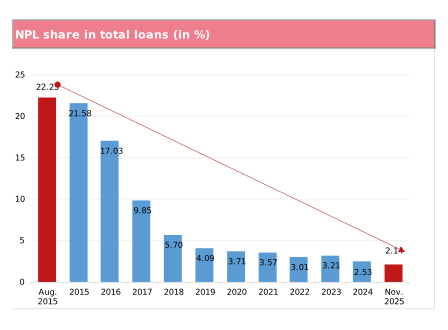
- The quality of the banking sector loan portfolio has improved – the NPLs were at their historical minimum of 2.14%.
All the relevant parameters in the insurance market also increased:
- In the first three quarters of 2025, the balance sheet total rose by 6.5% (to RSD 444.1 bn), capital by 10%, technical reserves by 3.2%, and total insurance premium by 8.5% (to RSD 143.8 bn) in y-o-y terms.
- Compared to the same period ten years ago – capital, total assets, technical reserves and total insurance premium more than doubled, which also contributed to the positive trend of insurance premium per capita.
- The voluntary pension funds sector had stable operations in 2025, with a steady rise in most important performance indicators.
- Net voluntary pension fund assets, amounting to RSD 65.2 bn at end-Q3 2025, recorded a 9.0% rise in y-o-y terms.
- The share of consumers of voluntary pension fund services in the total number of employees in Serbia was 9.8%.
Protection and new rights of financial service consumers
The new Law on the Protection of Financial Service Consumers, inter alia, introduces a cap on interest rates with the aim of preventing excessively high costs of loans.
Banks are required to apply reasonable measures that facilitate loan repayment for consumers if, during the term of the contractual relationship, circumstances arise that place the consumer in a difficult financial situation or other significant circumstances beyond the consumer’s control.
- By 15 December 2025, the NBS resolved 2,425 consumer complaints, the majority of which related to the conduct of banks (70.5%). A total of 1,710 complaints concerning the conduct of banks were resolved, of which 47.3% were founded.
- In this period, complaint proceedings generated the financial effect for consumers in the amount of over RSD 66 mn, while mediation proceedings resulted in a financial effect of approximately RSD 8.4 mn.
- Material effects for consumers were also generated in supervisory procedures, in cases when certain irregularities, often of a systemic nature were identified and banks were instructed to remove them for all consumers to whom they apply.
- The financial effect for consumers generated in this way in supervisory procedures this year amounted to over RSD 2.7 mn.
- The measures adopted by the NBS in these procedures are not limited to providing financial compensation to consumers, but also include orders aimed at preventing future irregularities and prevention measures in the banking market.
- Based on other measures taken by the NBS, a financial effect for consumers exceeding RSD 7.1 mn was generated.
- As a result of NBS activities in previous years, a large number of loan consumers who repay their loans early have benefited from a reduction in the outstanding debt.
An important step was taken towards further improvement of payment services, as Serbia became a member of the SEPA
On 22 May 2025, the Republic of Serbia officially became the 41st member of the Single Euro Payments Area (SEPA). Accession to the SEPA is an important step in the process of economic integration of our country with the European Union, as well as with the economies of the Western Balkans. With this step, the first phase of the accession process was completed, placing our country among the countries and territories that apply uniform standards for euro-denominated payments, thereby creating new opportunities for citizens and the economy in the area of cross-border transactions. Serbia’s accession to the SEPA is a result of years of work and reforms carried out by the NBS, in cooperation with other institutions, aimed at full alignment with European regulations. The real benefits for citizens and the economy are expected from 4 May 2026, when payment service providers from the Republic of Serbia join the SEPA payment schemes.7
- In the first 11 months of 2025, more than 203.3 mn transactions were executed in the RTGS and NBS Clearing systems, with a total value exceeding RSD 193,719.7 bn.
- In the NBS IPS system, more than 106.3 mn transactions were executed from the beginning of 2025 until 22 December 2025, an increase of more than 25% y-o-y.
- Rakuten Viber expressed an interest in integrating certain instant payment–based services in its application. This cooperation, initiated in 2024, continued into 2025 through activities aimed at integrating the functionalities of the Rakuten Viber application with the IPS NBS system services.
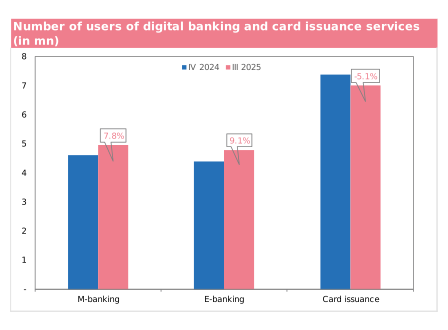
- At end-Q3 2025, the following results were recorded:
- 5.0 mn registered users of mobile banking services, a 7.8% y-o-y increase;
- 4.8 mn registered users of e-banking service, a 9.1% y-o-y increase.
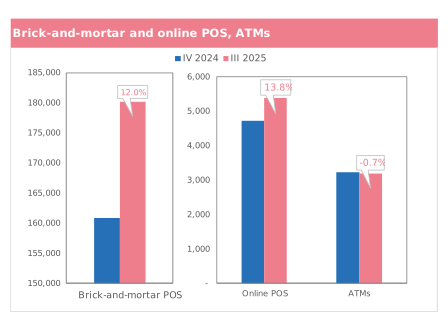
- At end-Q3 2025, the acceptance network:
- of brick-and-mortar points of sale included over 180 thousand, a 12% y-o-y increase:
- of online points of sale expanded to 5,377, a 13.8% y-o-y increase.
- The development of the payment services market continued. In our country, payment services are provided by seven payment institutions and six e-money institutions in addition to 19 banks. Further, five e-money institutions and the public postal operator also provided payment services through a widely distributed network of agents.
- The development of the digital assets market also continued. In addition to the two existing digital service providers that obtained a licence to provide such services in the previous period, the NBS issued one additional decision on licencing these service providers in 2025.
- As part of the modernisation of the DinaCard system, the NBS, in cooperation with banks and relevant technical partners, launched the following key components:
- A new DinaCard Switch, based on a modern high-performance architecture, which provides a more stable, faster, and more resilient transaction processing system;
- DinaCard Secure, a payment card solution compliant with the highest international technical standards (EMVCo), which enables strong customer authentication (SCA), significantly increasing protection against abuse in e-commerce.
- In 2025, the acceptance of Discover cards in the DinaCard network was enabled, with Banka Poštanska štedionica being the first to offer this functionality.
- During 2025, another bank operating in Serbia – OTP Banka – joined the NBS International and Interbank Clearing of FX Payments, enabling its clients to make faster and simpler FX transactions towards the system participants. Currently, the system participants include the NBS, thirteen banks with their head offices in the Republic of Serbia, six banks from Bosnia and Herzegovina, and one bank from Montenegro.
Foreign and exchange operations
In 2025, the NBS recorded foreign credit transactions (borrowing and lending), performed the Republic of Serbia’s foreign credit liabilities acting in the capacity of the Government’s agent, supervised FX and exchange operations (on-site and off-site), and actively cooperated with numerous institutions in the country with a view to protecting the financial and economic system from the risk of money laundering and other illegal actions.
- Aiming to encourage the most efficient supply of the exchange and FX market with foreign cash, we further streamlined the process for banks to supply cash to authorised exchange dealers.
- We adopted a temporary measure abolishing the fee charged by exchange offices when selling/buying foreign cash to/from citizens, aiming to protect citizens’ interests and prevent unjustified psychological pressures on the FX market. This decision is a continuation of the NBS’s consistent activities aimed at preserving the stability of the financial system, including previously taken measures that ensured increased availability of foreign cash and facilitated the operations of exchange dealers amid heightened demand.
A package of laws further enhancing the regulatory and supervisory framework in the field of banking and other financial services
On the NBS’s proposal, on 6 March 2025 the National Assembly adopted a package of laws aimed at enhancing the regulatory and supervisory framework in the field of banking and other financial services. This initiative primarily seeks to provide additional protection for consumers of these services and to foster further development of the financial market. The regulatory package will better serve both citizens and businesses, underpinning further economic development of the country.
- Law on the Protection of Financial Service Consumers – the main objective is to provide greater economic protection and improve the informedness of citizens in their use of banking and other financial services. It also aims to strengthen legal certainty, economic predictability, and stability regarding the status of financial service consumers, by capping interest rates on housing, consumer, and cash loans, as well as credit card debt and current account overdraft.
- Law Amending the Law on Banks – it strengthens the NBS’s supervisory mechanism within the banking sector and enhances the legal framework for bank resolution through the establishment of the Bank Resolution Fund, managed by the NBS. This ensures an additional layer of protection for budgetary and public funds during bank resolution processes and prevents a potential bailout of troubled banks from becoming a burden on taxpayers.
- Law Amending the Law on the National Bank of Serbia – it introduces solutions aligned with modern trends in central banking, particularly in the areas of institutional structure and functional powers of a central bank. It also includes specific provisions to ensure that domestic reserves of gold and other precious metals, under the NBS’s priority right to buy gold, remain within the country. This will help preserve and bolster FX reserves, a cornerstone of financial stability, from which both citizens and businesses benefit most. Moreover, the Law further aligns with the EU acquis under Negotiation Chapter 17 – Economic and monetary policy.
- Law Amending the Law on Foreign Exchange Operations – it enhances the NBS’s powers in supervising FX and exchange operations, including the imposition of fines. It establishes a more effective mechanism for sanctioning unlawful conduct and taking pre-emptive measures to ensure that FX and exchange operations are carried out in compliance with law.
Introduction of electronic bills of exchange – significant time and cost savings
On 1 December 2025, the Central Register of Electronic Bills of Exchange (CReM) became operational – a modern digital platform developed by the NBS.
CReM enables all operations related to bills of exchange – creation, issuance, transfer, presentation for collection, and deletion – to be carried out electronically, quickly, efficiently, and without paper documentation. This will significantly streamline operations, saving both time and costs for businesses and individuals alike.
NBS’s active role during Moneyval evaluation
- Since July 2024, the Republic of Serbia has been undergoing a mutual evaluation by the Council of Europe Committee of Experts on the Evaluation of Anti-Money Laundering Measures and the Financing of Terrorism – Moneyval – as part of the sixth round of such evaluations.
- As part of this process, in 2025, the NBS hosted a Moneyval team, who held discussions with representatives of relevant government authorities and private sector entities that are obligors under the regulation governing the prevention of money laundering, the financing of terrorism, and the financing of the proliferation of weapons of mass destruction.
- NBS representatives actively contributed across multiple areas related to the effectiveness of preventive measures and supervision within the financial sector, as well as technical compliance with FATF recommendations on anti-money laundering and counter-terrorist financing. They also shared their expertise and provided active support to institutions in other parts of the national system.
- The Moneyval report for the Republic of Serbia is to be published in the first half of 2026.
Governor's Office