
02/09/2026
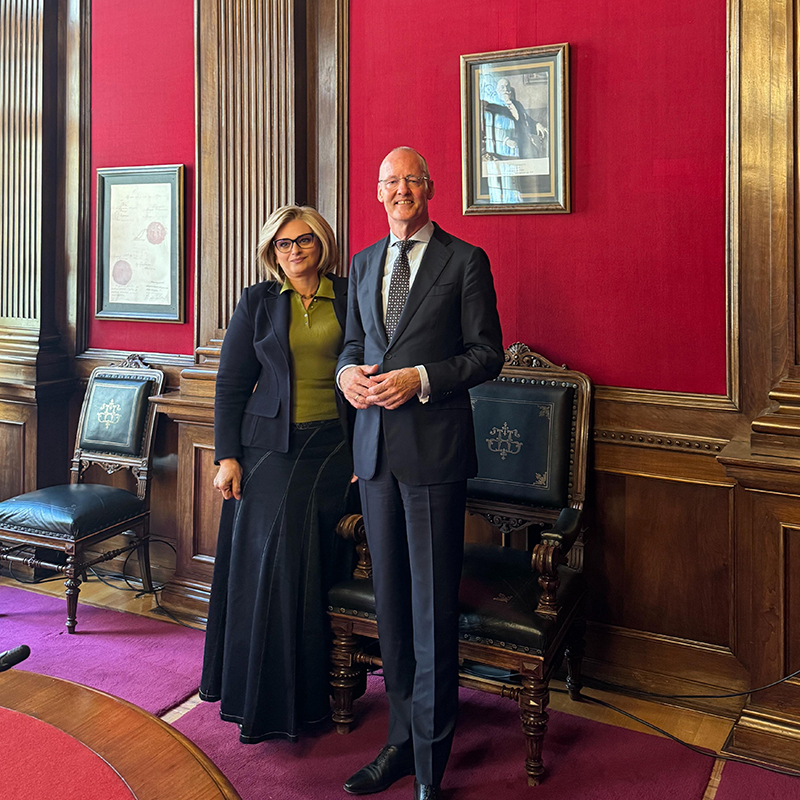
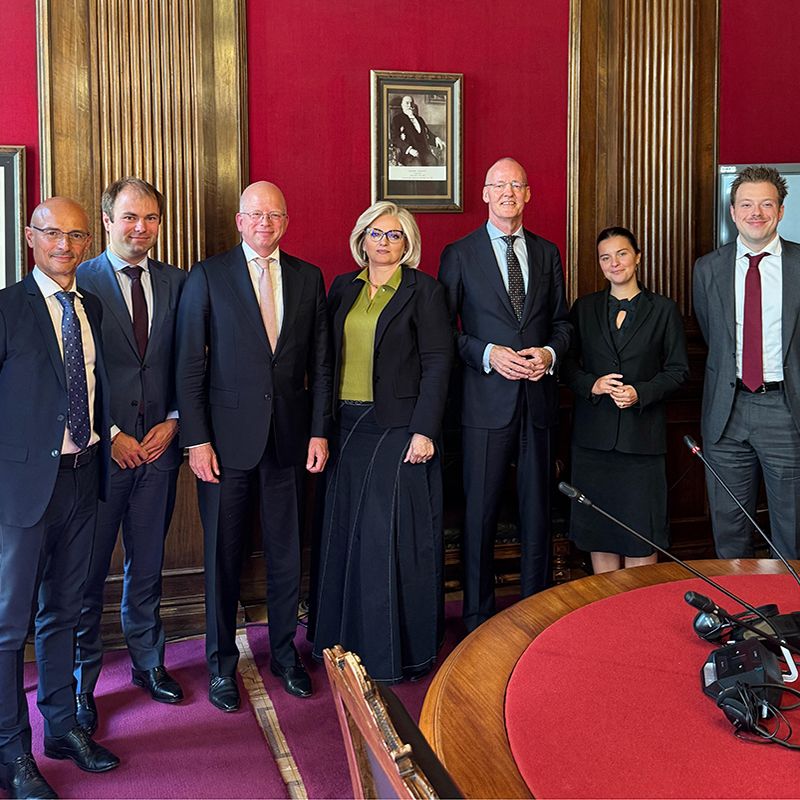
Today, Governor Jorgovanka Tabaković met at the National Bank of Serbia (NBS) with members of the TAIEX (Technical Assistance and Information Exchange) expert mission. As part of a broader regional initiative of the European Commission under the TAIEX instrument, the mission is intended for EU candidate countries and aims to provide support for further strengthening the legal and institutional framework safeguarding central bank independence, which is one of the key EU requirements in the area of economic and monetary policy.
The TAIEX mission comprised a team of experts led by Mr Klaas Knot, who served as Governor of De Nederlandsche Bank (DNB) and Chair of the Financial Stability Board, together with Mr Fons van Overbeek, Senior Economist, and Mr Cees Ullersma, Head of International Cooperation at the DNB. The recommendations and findings of the mission are intended to complement, but not replace, the monitoring and assessment process carried out by the European Commission under negotiating Chapter 17 – Economic and Monetary Policy.
At the meeting, Governor Tabaković, among other things, emphasised the NBS’s full commitment, as the lead institution responsible for the Economic and Monetary Policy chapter, to further strengthening the legal and institutional framework and applying the highest standards in the area of central bank independence – one of the fundamental principles underpinning the successful fulfilment of its mandates. Although domestic legislation in this area is largely aligned with the EU acquis, as also noted in the 2025 Progress Report on Serbia, the NBS has prepared a Draft Law on Amendments and Supplements to the Law on the National Bank of Serbia, which has been submitted to the European Commission for opinion. These amendments will ensure that the conditions are met for its full integration into the European System of Central Banks once when the Republic of Serbia accedes to the EU.
During the meeting, Mr Knot noted that central banks are generally recognised as institutions employing people whose expertise enables them to respond to all macroeconomic circumstances, including today’s exceptionally complex ones. Given the wide range of their responsibilities, the independence of central banks is of paramount importance for the prosperity of every country. “Running a central bank is founded on openness and on building and maintaining trust,” Mr Knot emphasised.
“Alignment with EU legislation is a dynamic process that requires continuous adjustment. A sound legal framework is an important element of a predictable business environment. However, even the best legal framework cannot guarantee central bank independence if there is an insufficient number of individuals within the institution whose professional and personal integrity give the principle of independence real substance and meaning – just as their commitment cannot be sustained without a framework that protects it. At the NBS, we are building precisely this balance between rules and practice. And independence has never meant a lack of accountability for us: precisely because we have been entrusted with autonomy in decision-making, we are obliged to explain every decision to both the National Assembly and the citizens. That is why we do not welcome missions such as this one simply because this is expected from us, but because an institution that stands behind its work has no reason to shy away from external scrutiny. However, as I always emphasise, in economics, as in life, there are no final victories, and we will always keep pace with the times in which we live and work,” concluded Governor Tabaković.
Governor’s Office